


Many of us are familiar with the well-known Mopane Worm found in the summer in amongst the Mopane trees at Ingwelala.
While most commonly referred to as the Mopane worm, it is actually a caterpillar of the Anomalous Emperor Moth - a large species that is most recognisable by the large spots on the wings that resemble eyes.
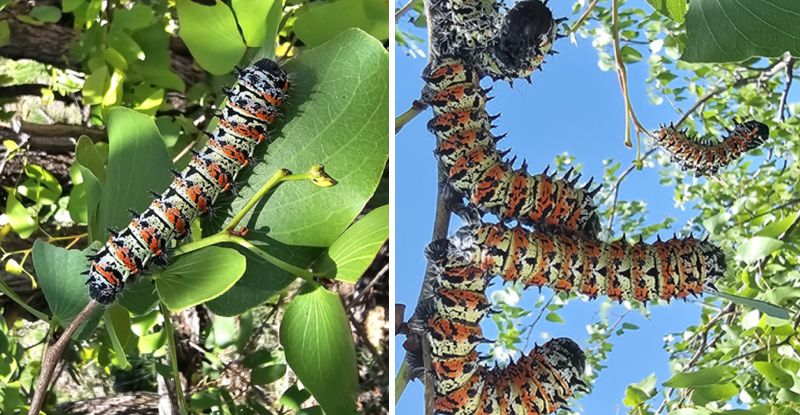
In the “Mopane worm” stage, these caterpillars are immediately recognisable by their bright orange, yellow and white markings on a predominantly black body, and can be tiny when they hatch, or incredibly large - up to 12cm in length before pupating! This species is a popular and vital food source across the warmer regions of Africa, containing up to 60% protein when dried.
Unfortunately, like most insects, they are particularly vulnerable to temperature changes, especially when in the larval or caterpillar form. As such, with the changes in climate observed in recent years, and especially with the intense heat experienced in December 2024, many of the young caterpillars seen last year succumbed before ever pupating. This, combined with over-harvesting and habitat destruction, means that the population of Mopane worms globally has declined dramatically, with them becoming completely extinct from some regions altogether. As such, it is wonderful to see them in higher numbers this season, and at a more advanced stage of development. Hopefully they continue to flourish at Ingwelala!
Did you know?
Mopane worms are not only a local delicacy and important food source, but they also play a vital role in ecosystem health, where they may be seen as one of the most impactful species for foliage consumption of Mopane trees. This can have a huge impact on the health and population of not only the Mopane trees, but on all surrounding plants - including those at ground-level! By increasing the consumption of leaves, there is increased sunlight and nutrient availability for other plants in the immediate area, allowing grasses, shrubs, forbs and herbs to flourish.
Fun Facts:
- To find Mopane worms easily, look for small “seeds” on the roads, scattered below Mopane trees. These “seeds” are actually their droppings, which fall en-masse below the trees they are feeding in! If you find these droppings, look amongst the leaves of the trees to find them. Although you may want to handle or taste them, please do not harvest or touch Mopane worms. They are best left where they should be - in the trees, doing what they are meant to do! !
Words by Tess Woollgar. Images courtesy of Josh Hibbett