


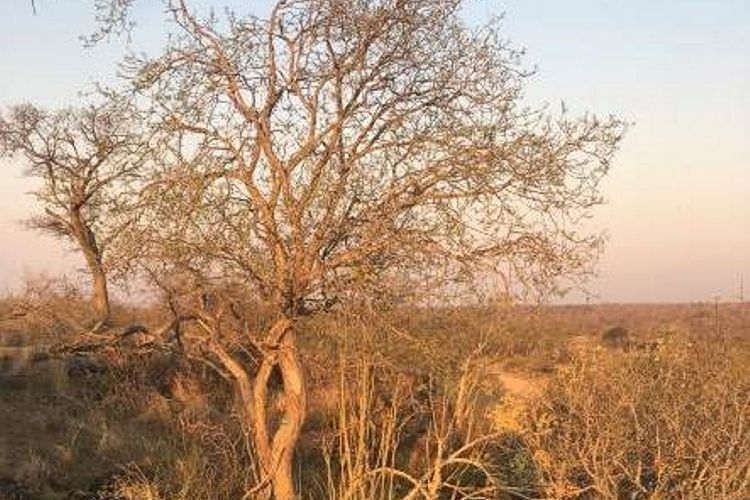
For this reporting month I thought it may be worthwhile to look at one of the less common established trees of Ingwelala and delve into its existence a little deeper.
Viewing of this tree (Ptaeroxylon Obliquum) in our traversing area is limited to the western banks of the Nhlaralumi river on Buffelsbed, specifically from klipspringer lookout to the river lookout north of Platform.
Ptaeroxylon (pronounced ‘teroxillon’) is a direct Greek translation meaning sneeze and wood, obliquum refers to the obliques shape of the leaflets, Umtata in the Eastern Cape takes its name directly from the Xhosa name for this tree. The Sneezewood is a protected tree in South Africa.
Ptaeroxylon (pronounced ‘teroxillon’) is a direct Greek translation meaning sneeze and wood, obliquum refers to the obliques shape of the leaflets, Umtata in the Eastern Cape takes its name directly from the Xhosa name for this tree. The Sneezewood is a protected tree in South Africa.
Common names: Sneezewood, Nieshout (Afr), Um Thathi (Xhosa)
Description
The Sneezewood is a shrub or medium deciduous tree that stands up to 15m tall, drought and frost resistant, it occurs most commonly in dry evergreen forests. Various age and size estimates exist but it is generally believed those trees in the mist belt or higher will attain sizes twice that of the bushveld trees in lower lying areas The bark is whitish-grey and smooth when young, but longitudinally fissured when aged.
Leaves and flowers
Sneezewood plants are easily identifiable by opposite leaves, with three to eight pairs of dark green leaflets including a terminal pair at the tip. Leaflets are distinctly asymmetrical in shape measuring roughly 2.5 x 1.3cm.
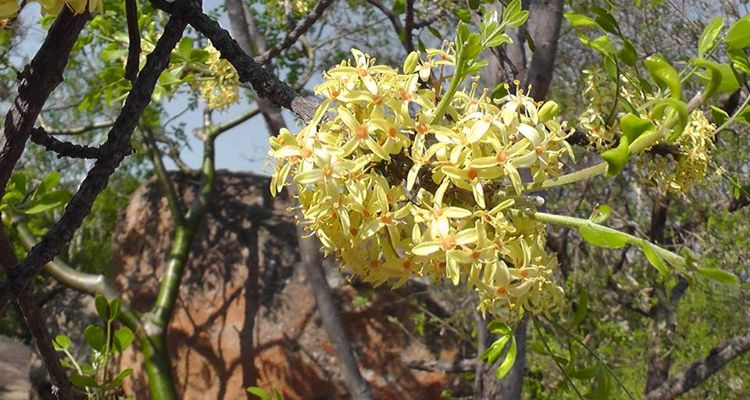
Flowers are small, aromatic, sweetly scented with four petals, opening white with an orange centre from creamy yellow buds and are produced from August to December. Male and female flowers occur on different trees, the fruit is an oblong capsule, notched at the tip and splits open to produce winged seeds. Of interest is that this is the flower of preference for the Common citrus Swallowtail butterfly.


Distribution
Sneezewood trees were first discovered in the Eastern Cape, their distribution range now extends northwards including Kwa-Zulu Natal, Mpumalanga, Limpopo, Swaziland, Zimbabwe, Mozambique, Eastern areas of Botswana, Zambia, and Tanzania. It propagates in woodland, scrub forest, evergreen montane forest and is found between the altitude ranges of 300-1400m.
Uses
Various antelope species and Giraffe will utilise the tree for browsing.
Sneezewood is extremely hard and durable and highly valued as a timber for fence posts, building, and for telephone poles. In the past, it was also used extensively for railway sleepers, this last known fact coupled with the timber used to fire the furnaces on the steamboats back in the 1800 has all but put paid to the large specimens. Little furniture was ever made from this, but with some perseverance and effort beautiful pieces can be made and these are highly prized today, highly irritant aromatic peppery oils containing nieshoutol are present in the wood which will cause violent sneezing by any woodworker when sanding or sawing (hence the name)
Common belief held is that the durability and hardness of the wood makes this a superior machine bearing to that of brass or iron when used in this application. In Mozambique the Sneezewood is the preferred wood in the manufacture of Xylophone keys.
The tree is used both medicinally and ritualistically, the bark is used as a snuff to relieve headaches, pieces of wood can be placed in cupboards to repel moths, the resin extruded once the wood is heated is used for the removal of warts as well as a repellent for cattle ticks.
Sneezewood is one of the most durable, bug and rot resistant woods in the world, in South Africa it is classified as ‘imperishable’. Part of the woods status as been little known in the Western world is testament to its great strength, durability, and hardiness, for centuries it has been utilised in a variety of functional roles in South/Southwest Africa.
Wood density of this tree is greater than that of fresh water, it will thus sink when submerged.

Fencing posts now used as decorative pieces and a 100-year-old fencing post still in use
Facts and images researched off the Internet. Words by Chris Mayes.