


Plants currently flowering at Ingwelala:
Mopani Pomegranate (Rhigozum zambesiacum)
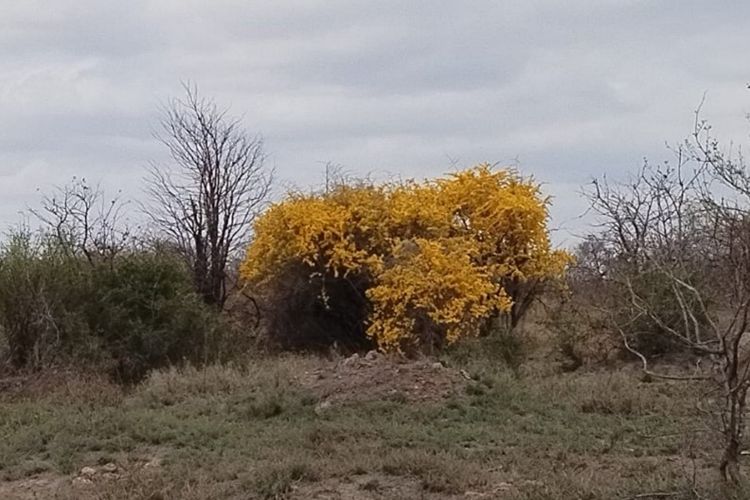
During late September and into the first week of October, you will notice these prolifically flowering yellow shrubs. This is the Mopani Pomegranate (Rhigozum zambesiacum). The Mopani Pomegranates are bright yellow and very distinctive when in full flower, presenting a flourish of magnificent colour in the landscape.
This yellow shrub is also called the Scrambled Egg Bush and in Afrikaans, Mopaniegranaat. This shrub reaches a height of between four to seven metres and has a smooth greyish-brown bark. Interestingly, the Mopani Pomegranate only flowers for about 10 days.
The genus Rhigozum derives its name from the Greek words rhigios, meaning stiff, and ozoz, meaning a branch. The branches are therefore very rigid with spines.

Aandblommetjie/Evening Flower (Pancratium tenuifolium)
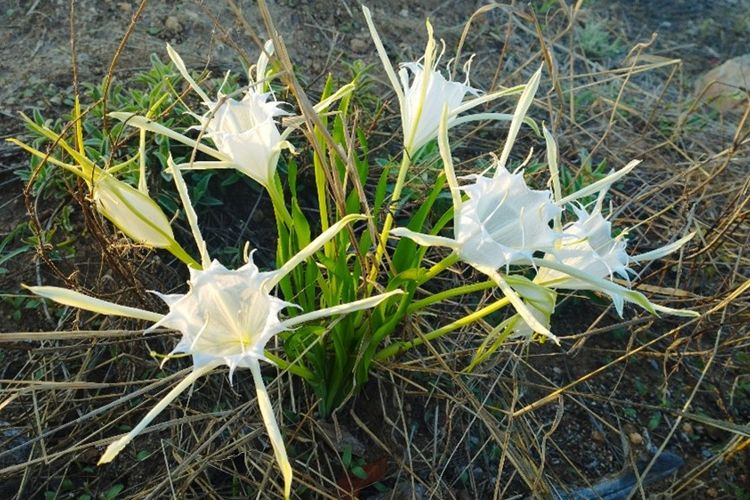
The evening flower (Pancratium tenuifolium) was first seen flowering on 03 October 2023 during a perimeter fence check at 06H00.
Populations of plant clusters are sparse and can thus easily be overlooked. Pancratium tenuifolium starts to produce leaves within a few days after the first good soaking spring/summer rains have fallen. These plants rarely flower and do not flower every year. Flowering lasts for less than 48 hours, making them a rare and beautiful sighting.

Bobbejaanstert (Xerophyta retinervis)
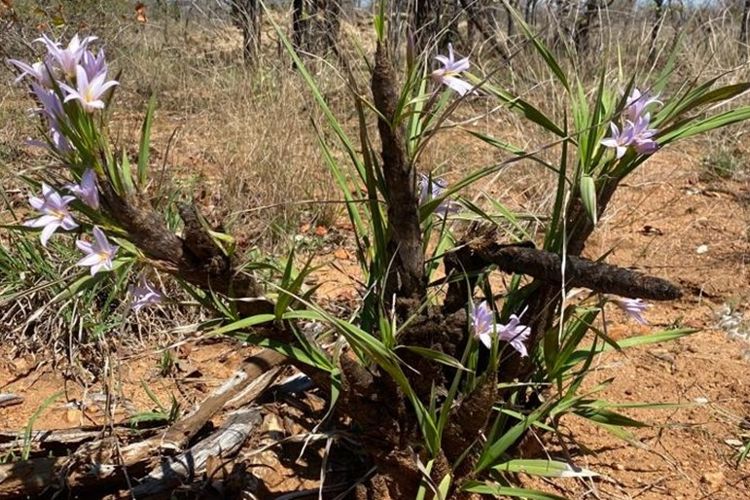
Xerophyta retinervis is a perennial plant that can grow up to 1.8 metres tall. It is a drought-tolerant plant with dark fibrous erect stumps that are tightly packed together, protecting the plant from veld fires. The dense stump may be adapted to trap moisture and limit water loss.

Small Leaved Plane (Ochna serrulate)
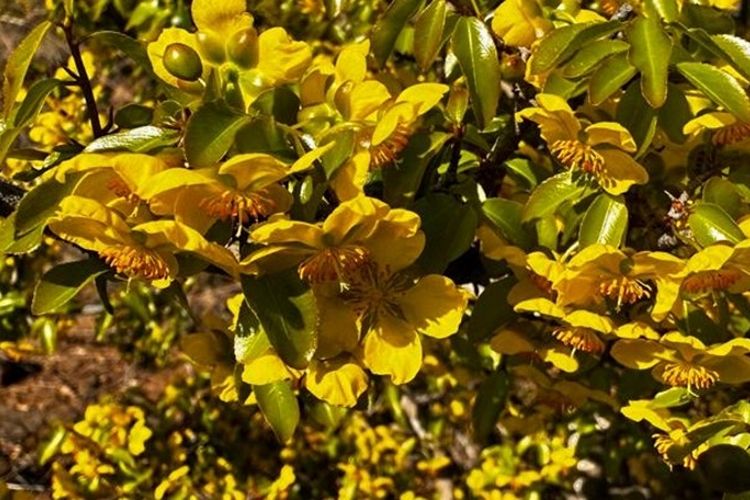
Ochna serrulate, also known as the Mickey Mouse bush, carnival bush, or in Afrikaans, fynblaarrooihout. This is a small shrub of one to two metres in length but can also grow to an impressive height of six metres. It has beautiful yellow flowers and shiny black berry-like fruits.
Knobbly Creeper (Combretum mossambicense)
The knobbly creeper forms either a shrub or a small tree (three to four metres). Most browsers enjoy feeding on the creeper.
Facts researched on internet words by Christine Wagner, & John Llewellyn. Pictures by Christine Wagner and Lizl Niemandt