


Sunbirds belong to the family Nectariniidae. South Africa has 21 species of sunbirds. Male sunbirds are bright in colour, whereas females are mostly dull brown.
Adaptations:
- Slows metabolism down at night and in cold weather to save energy.
- Short/round wings allow hovering while feeding on nectar.
- Tongue can be extended out of the beak for reaching the nectar in flowers such as aloes.
- Beaks are slender, curved, and have a sharp point for reaching the small aloe flowers.
Scarlet-chested Sunbird – Chalcomitra senegalensis


- 14 cms in length.
- Male – black, its throat, and chest are scarlet.
- Female – olive, grey-brown colour.
- Diet – insects and spiders, and nectar from aloes.
- Monogamous.
Amethyst Sunbird – Chalcomitra amethystine

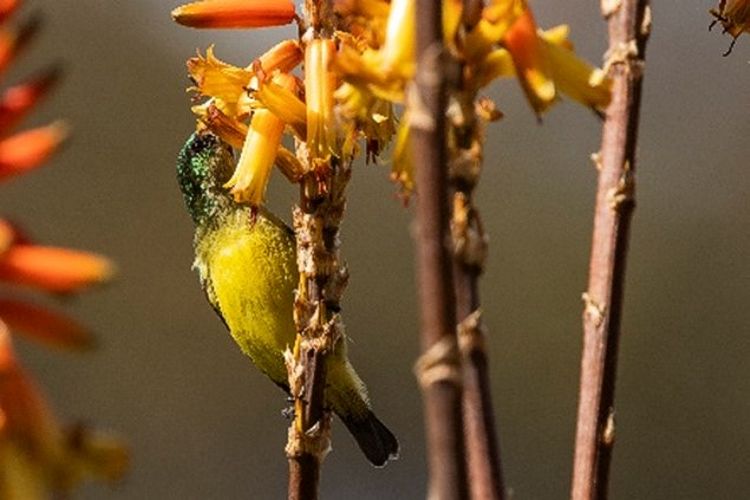
- Also known as the Black Sunbird.
- 14 cms in length.
- Male – black, with metallic green forecrown.
- Female – brown, pale eyebrows.
- Diet – nectar, insects, and spiders.
- Monogamous.
Collared Sunbird – Hedydipna collaris
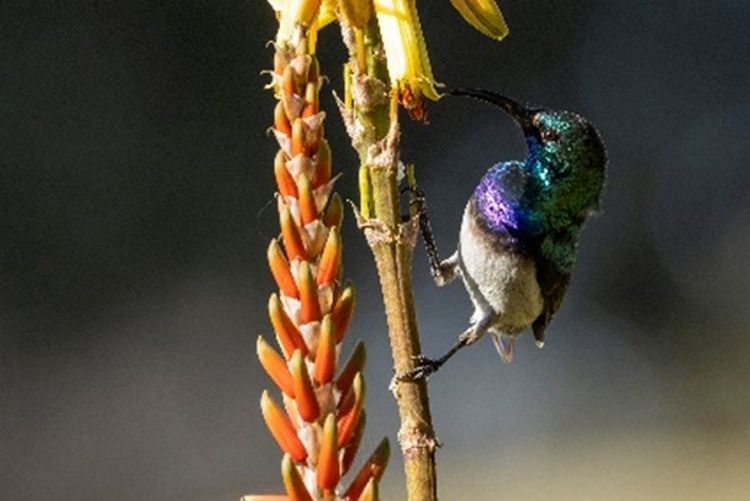
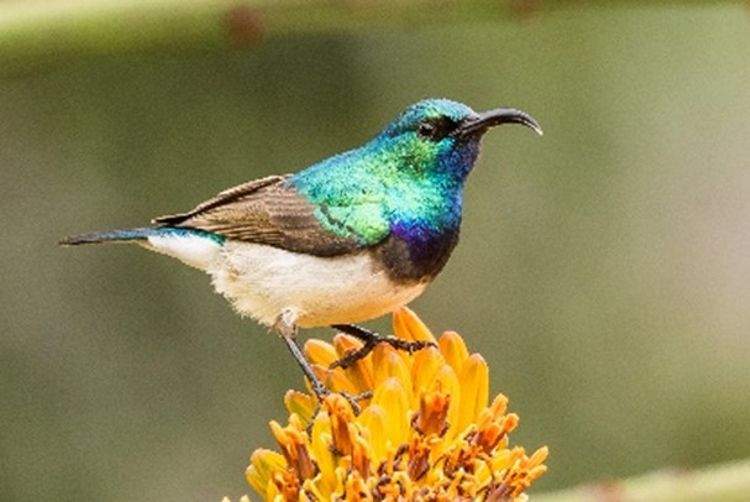
- 10 cms in length.
- Shorter bill compared to the other sunbirds.
- Male – yellow belly, glossy green underparts, and narrow, blue-purple breast band.
- Female – same colouring as the male, but without the breast band.
- Diet – nectar, insects, and sometimes small fruits.
- Build nests close to wasp nests for protection from monkeys.
- Monogamous.
White-bellied Sunbird – Cinnyris talatala
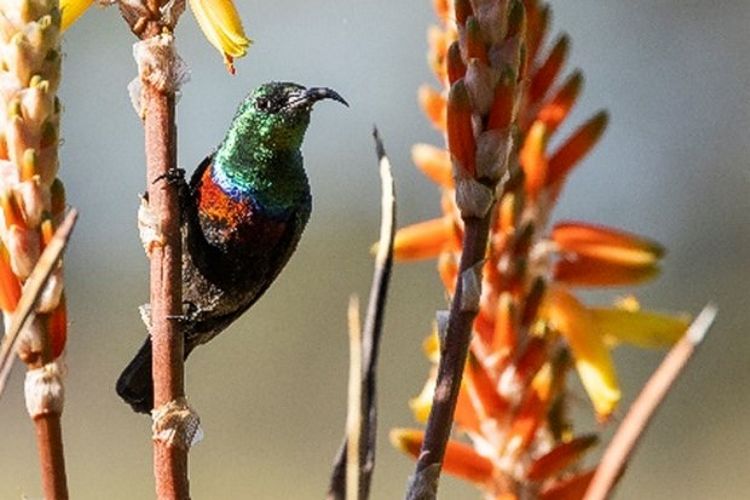

- 11 cms in length.
- Male – white belly, metallic purple line between belly and throat, green plumage.
- Female – white belly, brownish-grey plumage.
- Diet – nectar, insects, and spiders.
- Monogamous.
Marico Sunbird – Cinnyris mariquensis


- 13 cms in length.
- Male – dark, broad purple, maroon breast band.
- Female – grey, brown, heavily streaked with yellow belly.
- Diet – nectar, caterpillars, spiders, and flies.
- Monogamous.
Words and facts researched by Christine Wagner, photo’s courtesy Viv Newell and Christine Wagner