


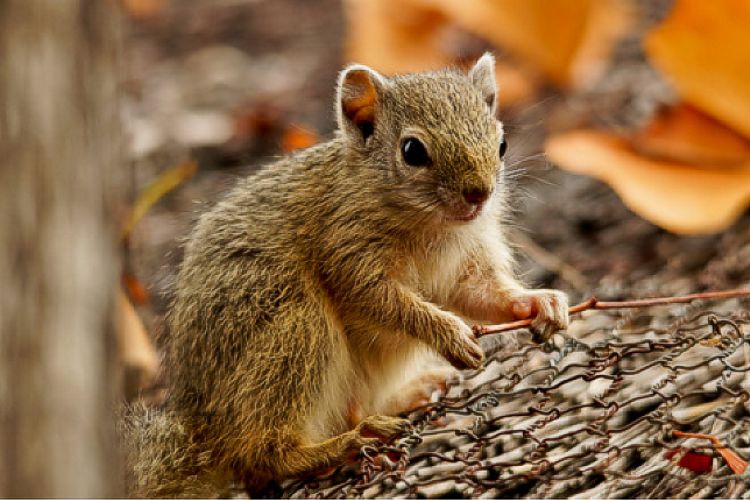
The tree squirrel (Paraxerus cepapi) is one of the most common small mammals in the lowveld, however it is also one of the most overlooked.
These brilliant, tiny mammals, also known as Smith’s bush squirrel, are one of the most adaptable small mammals that occur here.
Weighing in at a whopping 250 grams, squirrels have an average lifespan of eight years in the wild and are commonly found scurrying around at speed. Being avid climbers, squirrels have the distinct advantage of being able to access foods other savannah animals often cannot - lichens, fruits, flowers, seeds, leaves and even insects! This gives them the ability to conquer both ground and arboreal niches in their habitat, adapting to their needs as they arise.
Although trees are favoured by this rodent, dense foliage and thick forest are not commonly inhabited by tree squirrels, as the limited sunlight offers reduced food availability. As such, this species is more commonly encountered in savannah and mixed woodland habitats - fitting in perfectly at Ingwelala. Being largely arboreal, squirrels are known to sleep and nest in tree cavities, especially in Mopane woodland, but are also known to find ways into bungalows and other infrastructure.
Did you know?
Tree squirrels are highly social and territorial, usually living in family groups consisting of adults and offspring, within a territory marked by scent. Although they may seem solitary, which they may be on occasion, they are known to defend their own fiercely and will attack or chase other squirrels out of their territory with gusto. Once mature, at a mere nine months old, young adult squirrels will leave the territory to find their own space and form new family units.
Squirrels are also a reliable indicator of the presence of predators, often seen “taunting” the predator from the relative safety of a tree. Once a safe retreat has been achieved up a tree, squirrels will face the predator, vocalising and flicking the tail, to alert both the predator that it has lost the element of surprise, and other creatures in the area that there is a predator close by. Unfortunately, because of their small size, this means that alarm calls may be for anything from a snake or bird to a leopard or lion. Another defence mechanism employed by this small rodent is the act of mobbing predators - particularly snakes - with sudden bursts towards the predator observed. This is more evident when there are multiple squirrels together and is carried out to intimidate the predator into retreating.
Fun Fact:
- Tree squirrels live independently of water! Due to the high nutritional content of the food they eat, combined with the impressive absorption rate of their advanced digestive system, squirrels tend to get all the moisture they need from the food they eat. This does not, however, mean that they will not drink water if it is readily available.
Words by Tess Woollgar. Images courtesy of Stacey Pretorius and Bryce Woollgar.